
Practical Work as a Language of Care
A Man Called OveThis thread traces how Ove’s hands-on competence begins as inheritance and self-reliance, then becomes his way of caring for people who cannot manage alone.
increasing Bearing strength in each event
 decreasing
Bearing strength in each eventdecreasingLearning Through Engines
Learning Through Engines
Inherited knowledge
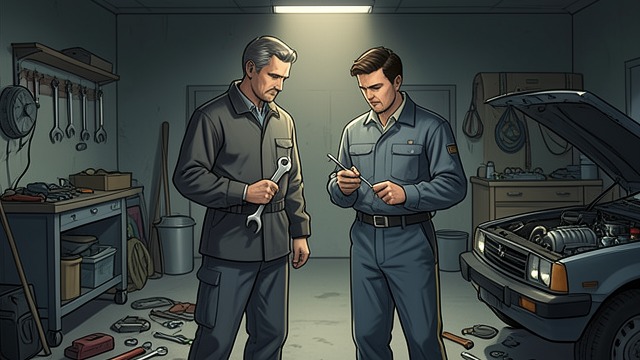
Ove’s father teaches him the parts of a Saab and the logic of maintaining an engine. He treats mechanical work as a moral relationship: an engine gives a person freedom when it is treated with respect, and fails when handled carelessly.
The lessons offer Ove a form of closeness that does not require either of them to speak much. Working beside his father gives him both technical knowledge and a model of patient, dependable care.
Skill as responsibility
After his father dies, Ove keeps working and learns to solve problems with the tools available. The railway yard gives him practical tasks whose completion can be judged by whether the machine works again.
These habits shape his adult faith in competence. For Ove, knowing how to repair something is not a display of status; it is a way to take responsibility when a problem is in front of him.
Building a Home by Hand
Building a Home by Hand
Work as self-making
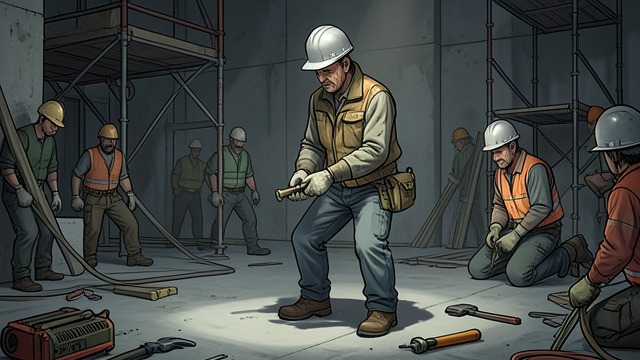
When officials seek to acquire Ove’s childhood home, he refuses to surrender it and decides to rebuild it instead. He takes laboring work on a construction site while studying how experienced workers calculate loads, measure floors, and handle materials.
The project turns competence into independence. Ove cannot rely on an inheritance of money or family, but he can acquire skills and use them to preserve the place his parents left him.
A lasting structure
The house comes together through repeated, physical labor, supported by tools and quiet instruction from the construction workers. Ove does not build for praise; a job done well is valuable in itself.
This project establishes the pattern that will define his later care. He responds to vulnerability not with abstract assurances but by making something usable, safe, and durable.
Making Space for Sonja
Making Space for Sonja
Adapting the house
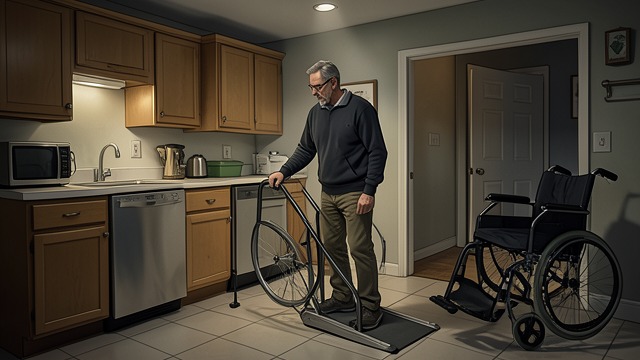
The bus accident leaves Sonja unable to walk, and officials suggest that she should be placed in a service home. Ove rejects the idea that their marriage should be separated by an administrative judgment, then returns home and changes the house for her needs.
He lowers the kitchen work surfaces, modifies doorways, and adds ramps so Sonja can live and work with greater independence. His practical response gives concrete form to the promise that they will keep living together.
Extending care beyond home
When the school refuses to build an accessible ramp, Ove constructs one himself. Sonja can return to her pupils, whose education and confidence become central to her life.
Ove’s skills therefore do more than compensate for physical barriers. They protect Sonja’s agency and make room for the work through which she gives purpose to others.
Repairs for the Neighbors
Repairs for the Neighbors
A skill put to use
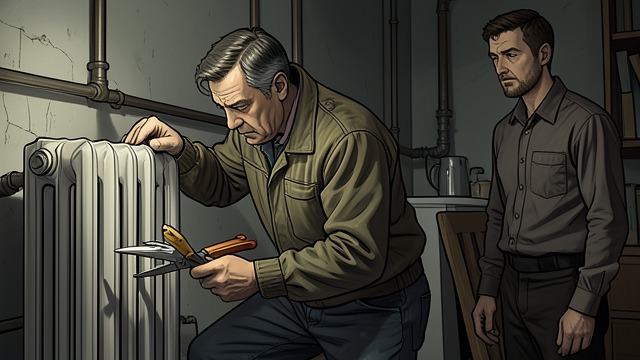
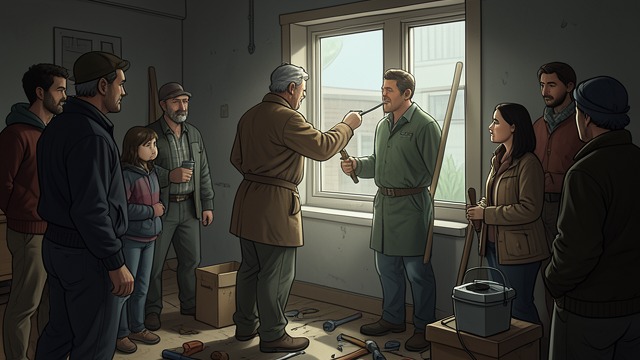
When Ove’s new neighbors need help with a radiator, he grumbles but knows how to bleed it. Patrick’s inability to open a jammed window, and later the family’s need for transport, draw Ove into further acts of practical assistance.
He also helps Adrian repair a bicycle and teaches him how to change tires. Each task becomes a small exchange in which Ove offers knowledge while younger neighbors learn to depend on their own hands.
Competence shared
Ove’s assistance spreads beyond his immediate household as neighbors ask him to fix structural and domestic problems. He continues to complain about people’s incompetence, but admits that having something to do during the day can be pleasant.
The practical skills once associated with a disappearing generation become useful precisely because Ove shares them. His knowledge is not preserved by keeping it in the shed, but by teaching and applying it among other people.
Repair as a Social Bond
Repair as a Social Bond
A community of useful acts
After Ove survives his heart attack, his days fill with requests from people nearby. He helps with repairs, gives advice, and continues to make himself available when a home or household problem exceeds its occupants’ abilities.
The work gives his neighbors a reason to approach him and gives Ove a reason to welcome, however grudgingly, their presence. Practical help becomes a shared language that bridges differences in age, temperament, and background.
What remains after him
Ove’s estate letter carefully organizes documents and practical instructions, but his deeper legacy is the confidence and mutual support he has helped build. He passes a car to Adrian and resources to the children around him, trusting people rather than merely storing objects.
The story reframes repair as an ethical act. Ove’s hands cannot mend every loss, but they can keep a household functioning, teach someone a skill, and make a neighbor’s life more livable.
Ove’s childhood before his father dies
After Ove refuses to sell his childhood home
After Sonja wakes from the ten-day coma
After Ove’s retirement, in the first snowy weeks
During the years after the neighborhood crisis
